Home › Guides › Restaurant equipment and food supply rules in Georgia
Restaurant equipment and food supply rules in Georgia
- Pick what you need and give your kitchen's ZIP code.
- Each service goes to the number of local companies you choose, from one to five. We check licenses where the law requires one and email you their names.
- You talk with them and decide. You hire and pay the company directly.
Facts checked 2026-11-02.
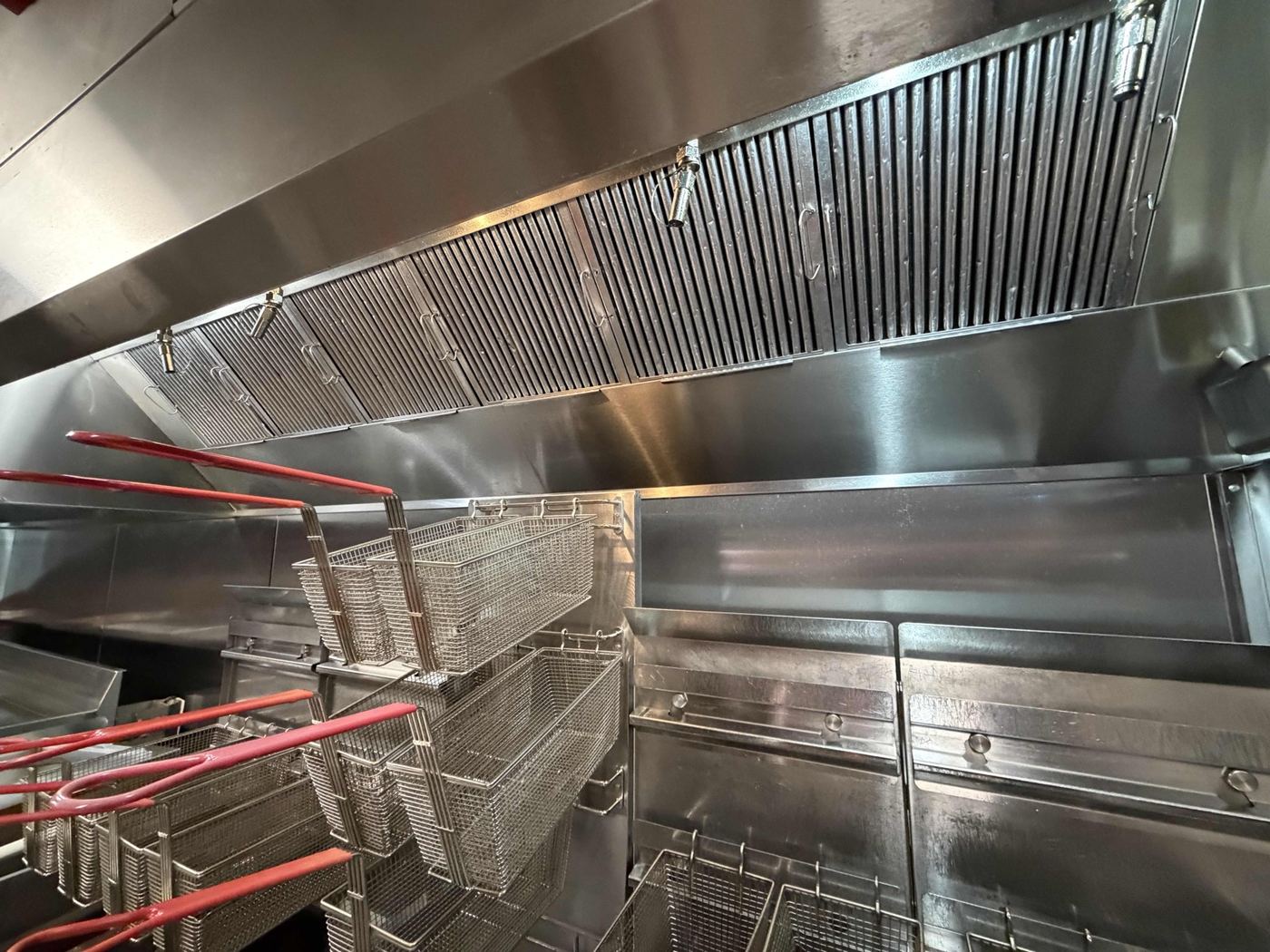
Georgia's food service rules cover the equipment in a restaurant kitchen and the food served from it. Both sit in the Department of Public Health (DPH) rules, Chapter 511-6-1, which the county health office enforces. Equipment must be commercial grade, and food must come from sources that comply with the law. Fixed equipment also has to be described by type and model in the plan review packet, and a utility rebate may help with the cost of some pieces.
Commercial-grade equipment
Rule 511-6-1-.05 says food service equipment must be commercial grade. It may be built to the standards of ANSI-accredited certification programs, with NSF and UL as examples. Equipment certified or classified for sanitation under a recognized American National Standard by an accredited program is considered to meet the rule's design standards. That holds when the equipment is used as intended.
A certification mark on the nameplate is the first thing to look for. Ask the dealer to show the certification for each piece you plan to buy, and keep the spec sheets in a binder. You will need the make and model for plan review.
Equipment in the plan review
When a new or extensively remodeled food service goes to the county health authority for plan review, the packet includes:
- the proposed menu
- the floor plan and equipment arrangement
- mechanical plans
- construction materials and a finish schedule
- the type and model of the proposed fixed equipment
- the expected daily service volume
The rule asks for the plans at least 14 business days before construction. The authority reviews them against DPH's Food Service Establishment Manual for Design, Installation and Construction. If you want to swap a unit after approval, ask the health office first.
Under Rule 511-6-1-.10, the health authority makes one or more construction inspections of a new or extensively remodeled place. The permit follows a preoperational inspection that shows the place was built or remodeled as approved, so the equipment installed should match the equipment on the approved plans.
The guide to opening a restaurant shows where plan review falls among the other permits.
A local company can take it from here. One form, free for restaurants.
Get connectedEquipment that touches other codes
Hood, fire and drainage rules reach some kitchen equipment as well.
- Hoods and exhaust. Anything that makes grease-laden vapor goes under a hood. See the guide to hoods and exhaust.
- Fire suppression. The system protects the hood, duct and appliances, and it must be serviced by a licensed firm. See the fire suppression guide.
- Drains and grease traps. Rule 511-6-1-.06 covers food service drainage. See the grease trap guide.
Before you move cooking equipment under a hood, check with the licensed fire company that services the suppression system.
Georgia Power rebates
Georgia Power lists commercial rebates that can apply to kitchen equipment. Its public page includes these:
- High-efficiency ventilation hoods with sensor control: $500 per horsepower.
- Commercial dishwashers: $350 per ENERGY STAR dishwasher, with low-temperature units excluded.
Each rebate has its own terms, so check them before you order.
Where food comes from
Rule 511-6-1-.04 says food must come from sources that comply with law. Food prepared in a private home may not be used or offered. Under the same rule, packaged food has to carry the labeling the law requires.
For a restaurant, that means buying from suppliers that can show they operate under the law and keeping the invoices. The county health office can say what it wants to see during an inspection.
Georgia's restaurant count in 2025
The Bureau of Labor Statistics counted 22,034 private restaurant and eating-place establishments in Georgia in 2025, up 24.6 percent from 17,690 in 2019. Fulton County had 3,414, and Gwinnett County had 2,265. Many of those places buy, replace or reconfigure equipment every year.
A buyer's checklist
- Get the certification for every piece of fixed equipment before it is bought.
- Record the make and model of each fixed unit so the plan review has them.
- Check where each unit sits in relation to the hood, the drain and the suppression nozzles.
- Ask the utility about rebates before the order goes in.
- File the receipts, spec sheets and invoices together.
Pick kitchen equipment or a food supply contact in the form, and we'll send the request to the Georgia companies that sell it, as many as you choose (one to five).
Questions
Does Georgia require commercial-grade equipment in a restaurant?
Yes. Rule 511-6-1-.05 says food service equipment must be commercial grade, and certification under an ANSI-accredited program such as NSF or UL is accepted as meeting the design standards.
What does the health office want to know about my equipment?
The type and model of fixed equipment goes in the plan review packet, along with the floor plan and mechanical plans.
Can I serve food made in a home kitchen?
No. Rule 511-6-1-.04 says food prepared in a private home may not be used or offered.
Does Georgia Power offer rebates for restaurant equipment?
Its commercial rebates page lists $500 per horsepower for high-efficiency sensor-controlled ventilation hoods and $350 per ENERGY STAR dishwasher. Check each program's eligibility rules first.
Sources
- Georgia Rule 511-6-1-.05, equipment and facilities
- Georgia Rule 511-6-1-.04, food sources
- Georgia Rule 511-6-1-.06, food service drainage
- Georgia Rule 511-6-1-.02, plan review
- Georgia Rule 511-6-1-.10, inspections
- DPH food service page
- Georgia Power commercial rebates and incentives
- BLS QCEW restaurants, 2025
- BLS QCEW restaurants, 2019